
This series of recordings present a holistic approach to the diagnosis of pain causing poor performance and its treatment and management – using a multidisciplinary approach. It brings together an unique spectrum of expertise among the contributors, who bounce practical ideas off each other in an engaging way in the discussions. Although some of the lectures provide a theoretical background to pain in its varied forms and how this can be communicated by horses or measured in certain anatomical areas, many of them are brimming with practical take home tips of key clinical relevance when investigating horses which are presented with a history of poor performance. Various approaches to pain management are described at length, providing evidence-based information whenever possible to support efficacy. Methods of behavior modification are also discussed. This is a unique course giving you tools to enhance your diagnostic and therapeutic skills for the benefit of your clients.
This series of recordings is composed of
- four recording packages of lectures providing insight into specific fields that need to be considered for which there is a rider complaint of decline in performance of horses or a failure to progress in training without any obvious causes.
- three recordings of panel discussions on the lectures contained in the recording packages of lectures.
The viewing of the recordings for one year can be bought as a package or on separate. The viewing time begins with the first use of the purchased ticket. Further views purchased thereafter will cost half price.
The Akademie für Tierärztliche Fortbildung in Germany (Academy for Continuous Education for Veterinarians) credits the recording packages of lectures with a total of 15 hours. To acquire the certificate; please send an email to Arno Lindner (arnolindner@agpferd.com)
- requesting the questionnaire with questions on the content of the lectures
- answer the questions and send the questionnaire to Arno
- if the answers are correct the accreditation will be sent to you via email.
Lecturers
Katrina Ask, Sue Dyson, Laurie Goodrich, Pat Harris, Kevin Haussler, Sabine Kästner, Johan Lundblad, Joao Paulo Marques, Annamaria Nagy and Gemma Pearson
RECORDING PACKAGES OF LECTURES
1st package of recorded lectures on understanding pain as a cause for poor performance of horses without obvious clinical findings (3:51 hours)
The lectures and their presenters are
- What is pain? Types of pain, their causes, specific regions and lesions. What influences its severity? What is wind-up, hyperesthesia, allodynia, neuropathic pain? Sabine Kästner (1:09 hours)
- The challenges of localizing pain in horses. Why it is difficult to describe where the pain comes from and what triggers it (lesion, saddle, rider, lack of natural movement, training, etc.) Kevin Haussler (1:00 hours)
- How changes in performance can be manifest in horses from different work disciplines. Understanding riders’ problems. Sue Dyson (0:52 hours)
- Disguising musculoskeletal pain: Common conditions that result in poor performance without overt lameness in hand or on the lunge – the ways in which horses modify gait to disguise pain (evolutionary benefit). Sue Dyson (0:49hours)
2nd package of recorded lectures on how to diagnose poor-performance-related pain in horses. Part 1 (2:34 hours)
The lectures and their presenters are
- The clinical examination: history, posture evaluation, assessment of muscle development musculoskeletal sources of pain, dynamic examination to assess pain or neurological modifications of gait. Sue Dyson (0:40 hours)
- The value and limitations of diagnostic anesthesia and pharmacological treatment. Sue Dyson (0:48 hours)
- Diagnostic treatment options with integrative medicine practices and tools (mechanical nociceptive thresholds, algometer, myofascial trigger points, acupuncture points, etc.). Kevin Haussler (0:59 hours)
3rd package of recorded lectures on how to diagnose poor-performance-related pain in horses. Part 2 (3:34 hours)
The lectures and their presenters are
- Use of the Ridden Horse pain Ethogram for recognizing musculoskeletal pain: Uses, confounding factors and limitations – and other behavioral modifications (e.g., tacking-up, mounting, respiratory pattern & noises, sweating, defecation). Sue Dyson (0:51 hours)
- Difficult horses: Behavior changes due to pain without obvious lameness. Gemma Pearson (0:48 hours)
- When the Vet is Away: Assessing Pain in Horses Through Video Analysis. Katrina Ask and Johan Lundblad (0:47 hours)
- Reaching the ultimate diagnoses to determine causes of pain with diagnostic imaging – uses and limitations. Annamaria Nagy (1:10 hours)
4th package of recorded lectures on treatment and management of pain (2:57 hours)
The lectures and their presenters are
- Medical (systemic and specific like intraarticular): Evidence for clinical efficacy? Laurie Goodrich (1:39 hours)
- Nonpharmacological treatment options (manual therapies, acupuncture, electrophysical modalities): Evidence for clinical efficacy? Joao Paulo Marques (1:30 hours)
- EGUS: Is it the stomach? How to know and manage or even avoid through nutrition? Pat Harris (0:44 hours)
- Biopsychosocial approach to treating these cases. Gemma Pearson (0:40 hours)
RECORDINGS OF PANEL DISCUSSIONS ON THE LECTURES CONTAINED IN THE RECORDING PACKAGES 1-4
These informal interactive discussions expand on what is delivered in the formal lectures, reflecting the panelists’ individual experiences in horses from different geographical locations and involved in different sports disciplines.
1st panel discussion on understanding pain as a cause for poor performance of horses without obvious clinical findings (2:06 hours)
Panelists: Sue Dyson, Kevin Haussler, Sabine Kästner
Chair: Katrina Ask
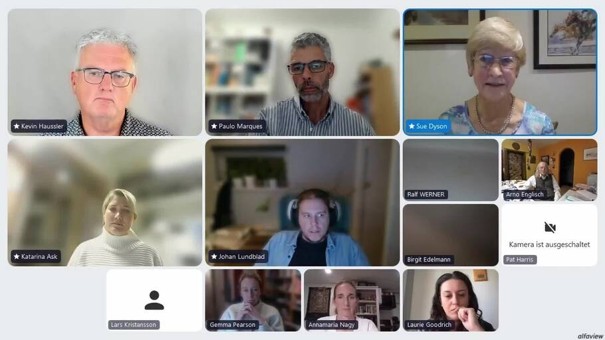
2nd panel discussion on how to diagnose poor-performance-related pain in horses (2:31 hours)
Panelists: Katrina Ask, Sue Dyson, Kevin Haussler, Johan Lundblad, Annamaria Nagy, Gemma Pearson
Chair: Joao Paulo Marques
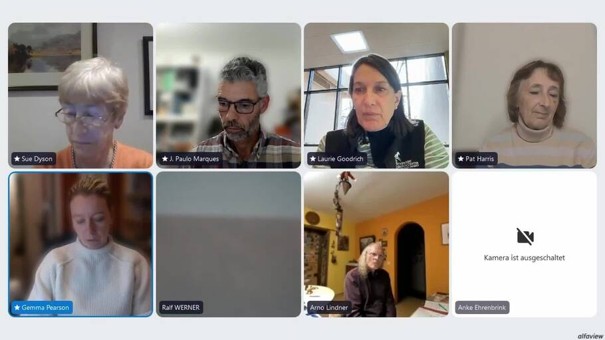
3rd panel discussion on pain treatment and management (2:12 hours)
Panelists: Laurie Goodrich, Pat Harris, Gemma Pearson, Joao Paulo Marques
Chair: Sue Dyson
Speakers
Katrina Ask
is a researcher and university lecturer at the Swedish University of Agricultural Sciences (SLU). After earning her veterinary degree from the University of Copenhagen, she spent several years working in large animal practice and as an equine veterinary surgeon. She later completed a PhD at SLU on behaviors and facial expressions associated with equine orthopaedic pain. Balancing time between teaching and research, her ongoing research primarily focus on pain assessment in bovines and equines, and those behaviors and facial expressions linked to orthopaedic pain. Katrina further utilizes advanced objective gait analysis to study movement patterns during lameness in bovines and equines, and to explore the relationship between pain and movement asymmetry.
Sue Dyson
graduated from Cambridge University, United Kingdom. She was Head of Clinical Orthopedics at the Animal Health Trust in Newmarket, England for many years until 2019 and is now an independent consultant. She has a passion for the investigation of poor performance using a holistic approach to the horse, tack, rider triad to try to maximize potential. Sue has also ridden at top British level in Eventing and Show Jumping and has trained horses that have competed at the Olympics and World Championships.
Laurie Goodrich
is the Director of the Orthopedic Research Center at Colorado State University’s C. Wayne McIlwraith Translational Medicine Institute and an equine surgeon specializing in orthopedic surgery and lameness with a focus on musculoskeletal injuries and trauma. She is an American College of Veterinary Surgeons (ACVS) Founding Fellow in Minimally Invasive Surgery, Equine Orthopedics. She received her DVM from the University of Illinois, completed an internship at Virginia Tech Regional College of Veterinary Medicine and an equine surgical residency at the Marion DuPont Scott Equine Medical Center in Northern Virginia. During that time, she also completed a Master of Science in Pharmacology at Virginia Tech. She joined the faculty at Cornell University as an Equine Surgeon in 1996 and also completed a PhD in cartilage repair in 2005 while at Cornell. She then began at CSU in 2005 as an Assistant Professor of Equine Surgery and is currently a Professor of Surgery and a principle investigator in the Orthopedic Research Center. She is a translational scientist whose research focuses on regenerative medicine, gene therapies and biologics to improve joint and bone repair in both animals and people. She has received the Elastikon Award in Research Excellence from the Grayson Jockey Club Research Foundation, the Cabaud Award in Research from AOSSM and CSU’s AAEP Clinician of the Year Award for teaching excellence. She is currently president of ACVS, on the Board of Directors for North American Veterinary Regenerative Medicine Association and, is the chair for the Preclinical Models Section of the Orthopedic Research Society.
Pat Harris
after qualifying from Cambridge University, she completed her Ph.D. at the Animal Health Trust into the Equine Rhabdomyolysis Syndrome. She joined the Waltham Centre for Pet Nutrition (now Waltham Petcare Science Institute) in 1995 where she worked for over 30 yrs. As Director of Science for Mars Horsecare and Head of the WALTHAMTM Equine Studies Group, she was responsible for their equine research conducted in collaboration with experts at institutes and universities globally. This provides the science behind the SPILLERS™, BUCKEYE™ Nutrition, and WINERGY™ brands. In 2025 she became Nutrition and Science Advisor to Mars Horsecare and the Equine Studies Group. She is also a scientific advisor to MARS EquestrianTM sponsorship. Pat is a European Specialist in Veterinary Clinical and Comparative Nutrition, an RCVS recognized specialist in veterinary clinical nutrition (equine), and a British Equine Veterinary Association Past-President. She is also a member of several international society and charity boards and holds, or has held, several academic posts within various institutions around the world. Pat lectures internationally on nutrition as it affects the health, welfare, behavior, and performance of the horse. She is the author or co-author of over 500 scientific papers, abstracts, and book chapters with recent emphasis on obesity, laminitis, and senior horse nutrition.
Pia Haubro
is Professor of Large Animal Surgery at the Swedish University of Agricultural Sciences at Uppsala. She performs experimental and clinical research in the large animal clinic, including retrospective studies on clinical efficacy, with an overall aim of developing effective surgical methods documented by objective clinical methods.
Kevin Haussler
graduated from The Ohio State University, College of Veterinary Medicine in 1988. He was trained in the conservative management of spinal-related disorders in humans at the Palmer College of Chiropractic-West and completed a veterinary chiropractic certification program in 1993. He attended the University of California-Davis to attain a PhD focusing on spinal pathology and pelvic biomechanics in Thoroughbred racehorses. Post-doctorate training involved evaluation of in-vivo spinal kinematics in horses at Cornell University. While at Cornell, he directed the newly formed Integrative Medicine Service which provided chiropractic, acupuncture and physical therapy services to both small and large animals. Kevin was Associate Professor at the Orthopedic Research Center at Colorado State University and involved in teaching, clinical duties, and research into the objective assessment of musculoskeletal pain, spinal dysfunction and the application of physical therapy and rehabilitation. Since 2024 he is an Associate Professor at Lincoln Memorial University in eastern Tennessee. He is a charter diplomate of the American College of Veterinary Sports Medicine and Rehabilitation and a course instructor for the Equine Rehabilitation Practitioner Certification course at the University of Tennessee.
Sabine Kästner
is Professor of Veterinary Anesthesiology, Intensive Care Medicine and Pain Therapy at the University of Veterinary Medicine Hannover Foundation and Senior Vice President of the international Association of Veterinary Anesthetists (AVA). She is a diplomate of the European College of Veterinary Anesthesia and Analgesia (ECVAA), a specialist veterinarian for horses as well as for anesthesiology, pain management and intensive care. As a founding member, she has been active since 2008 in the Initiative for Veterinary Pain Therapy (ITIS). The ITIS core group is made up of leading specialists in veterinary pain therapy. In addition to the core group, veterinary experts for the respective specialties are responsible for the recommendations for pain management in the various animal species.
Johan Lundblad
is a postdoctoral researcher at the Swedish University of Agricultural Sciences (SLU), specializing in equine pain assessment, stress responses, and clinical biomechanics. His research focuses on how stress and sedatives influence pain expression in horses, using advanced facial expression analysis (EquiFACS) to refine objective pain assessment methods. He also investigates movement asymmetries and lameness evaluation in young horses. A practicing veterinarian with expertise in orthopedics and emergency care, he teaches structural anatomy and supervises veterinary and animal science students.
Joao Paulo Marques
is certified in Animal Chiropractic (IVCA) as well as Veterinary Acupuncture (IVAS). Besides being an FEI Official Vet, he is a Certified Equine Rehabilitation Practitioner (CERP) by the University of Tennessee as well as an instructor of CERP in Europe and a past member of the Board of Directors of the Veterinary Rehabilitation and Physical Therapy (IAVRPT) and of the International Veterinary Chiropractic Association (IVCA). He was a member of the Equine Physiotherapy Team at the Olympic Games in Tokyo 2021 and at the World Equestrian Championships in Herning and Pratoni 2022, and Leader of the Equine Physiotherapy Team at the Olympic Games in Paris 2024.
Joao Paulo is Editor and co-author of the textbook “Essential Facts of Equine Physical Therapy, Rehabilitation and Sports Medicine”, published in 2024.
He was also former director at the Equine Rehabilitation Centre Hidrovet in Portugal and runs the equine veterinary practice Equidesporto.
Annamaria Nagy
is an Associate Professor at the University of Veterinary Medicine Budapest, where she is leading the orthopedic diagnostics and diagnostic imaging department. Formerly, Annamaria was a senior clinician at the Animal Health Trust in Newmarket, UK. Annamaria is a Diplomate of the European and American Colleges of Veterinary Sports Medicine and Rehabilitation and holds an RCVS Fellowship Diploma and a PhD for her research on epidemiology of endurance rides. Her special interests lie in diagnosing complicated lameness and poor performance cases and in advanced orthopedic imaging, including MRI and standing CT. Annamaria has published over 40 scientific papers in peer-reviewed journals and is regularly invited to speak at national and international meetings. Annamaria is an FEI level 4 endurance official and treating veterinarian and has also worked as a team veterinarian at European and World Championships.
Gemma Pearson
combines her time between research and outreach as Director of Equine Behavior at The Horse Trust and running a referral clinic for clinical equine behavior cases where she is based at the University of Edinburgh. She is also an accredited racecourse veterinary surgeon and enjoys working at Musselburgh racecourse.
After working in ambulatory practice Gemma moved to the Royal (Dick) School of Veterinary Studies where she completed a rotating residency program in the equine hospital, completing her Cert AVP (EM), alongside an MScR investigating horse veterinarian interactions.
Subsequently she completed her CCAB (certified clinical animal behaviorist) and her PhD thesis ‘Stress in equids undergoing veterinary care and the development of interventions that positively influence the horses’ experience’. As well as continuing with her own research she supervises several students at PhD, MSc and undergraduate level.
In 2022 Gemma became the first person to become a species specific RCVS recognized specialist in Veterinary Behavioral Medicine (Equine) and was awarded Fellowship of the RCVS in 2024 for meritorious contributions to clinical practice.
Gemma is frequently invited to lecture internationally, as a recognized expert in this field and an excellent communicator. One of the most successful projects was filming a series of short YouTube videos with the British Equine Veterinary Association aiming to reduce injury rates when dealing with difficult horses under the ‘Don’t break your vet’ campaign.
Gemma is passionate about improving interactions between horses and people, specifically regarding the application of learning theory. In her spare time, she has competed up to advanced level endurance on a homebred horse as well as enjoying competing in affiliated dressage and eventing. Currently she is retraining a Thoroughbred recently retired from racing.